828 NE A St, Grants Pass, OR 97526

What Are My Options After Losing Teeth?
If you suffer from tooth loss, dental implants can restore your smile and confidence by enhancing your functionality and overall oral health. Known as one of the most secure and long-lasting tooth replacement options available, dental implants can seamlessly blend in with the rest of your teeth so you can start smiling again.
Dental Implant Options
Single Tooth Implants
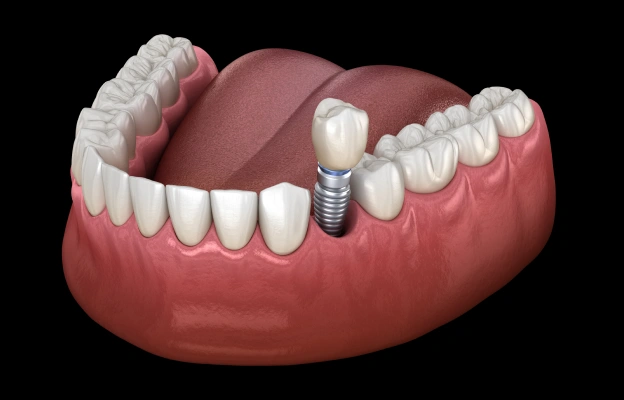
As the most-frequently used dental implant, single-tooth implants are made up of two main parts. The dental implant, or post, is a titanium rod with a screw-like shape. A dental crown is the restoration that is usually applied to the single implant.
To place a single dental implant, the post is bonded permanently into your gum and jaw. As the gum heals, a dental crown is created, which is eventually attached to the post by an “abutment.” This dental crown reinstates the shape, function, and appearance of your natural tooth. Unlike a partial denture, single-tooth implants are extremely durable and never move or shift.
Full-Arch Implants
If you are missing all or most of your natural teeth and are looking for a secure, durable alternative to traditional dentures, full-arch implants may be the best option for you. By placing a series of 4-6 dental implants per arch into your mouth, you can enjoy the look and function of a new smile that can last a lifetime.
These dental implants act as artificial roots that allow a set of removable implant-supported overdentures or fixed dental bridges to permanently bond to the gumline and restore your smile. Full-arch implants look and feel much more natural, and will never shift or move when you eat or speak, unlike dentures.
Mini Implants
Similar to standard dental implants, mini implants are about half of the size of a traditional implant. They can be used to restore one tooth or several missing teeth, but mini implants are most commonly used to support a set of dentures in the lower jaw.
Due to their small size, the placement process is not as invasive as traditional implants. Plus, mini implants can usually still be applied in your jaw, even if it has been weakened by bone resorption after tooth loss.